Envision Gen 8 Selected for 442 MWh Grid Forming BESS in Germany Taking Partnership Close to 600 MWh


Envision Energy and ju:niz Energy are expanding their partnership in Germany's utility-scale storage market. The companies announced on 9 November that they will advance the Smareg 13 battery storage project in Vöhringen, Bavaria. Also known as Vöhringen II, the project is now described as a 442 MWh development using Envision's Gen 8 storage platform in a four-hour, grid-forming configuration.
ju:niz Energy will lead development, financing, construction and long-term operations, while Envision will supply the storage technology and support project delivery. Once operational, the asset is expected to provide flexibility and balancing services to the Bavarian power system.
Grid forming capability and low noise design shape the project brief
The project will use grid-forming technology. Unlike conventional grid-following systems, grid-forming assets can establish voltage and frequency references and provide stronger dynamic support to low-inertia grids or systems with high shares of renewable generation. Grid-forming performance, however, is not determined by the battery enclosure alone. It also depends on the PCS, control architecture, protection settings and grid-connection parameters. The current announcement does not identify the PCS supplier or disclose the grid-code and testing requirements that the function will need to meet.
Low-noise design is another stated priority. ju:niz said the Smareg 13 site is noise-sensitive, making the low-noise characteristics of Envision's Gen 8 platform a factor in product selection. Envision previously quoted a sound level of around 55-58 dB for the platform's 10-foot DC storage unit. Smareg 13 has not yet disclosed the project boundary, equipment count, measurement distance or site-level noise limit, so the product figure should not be treated as the final boundary noise performance of the completed plant.
Envision-branded storage equipment prepared for delivery. The Gen 8 platform has been selected for the planned Smareg 13 project. Source: Envision Energy / ju:niz Energy.
From local planning to a 442 MWh design Smareg 13 enters a new phase
Smareg 13 was under development well before the November announcement. Documents from the City of Vöhringen show that the municipal council initiated amendments to the land-use plan and the site-specific development plan on 28 April 2025. Because the site lies outside the existing urban planning area, the amendments are needed to establish the legal basis for a utility-scale battery storage facility.
Local planning documents published in early 2026 describe an area of around 32,710 square metres, or approximately 3.27 hectares, covering plots 1194 and 1196 and part of plot 1166 in Vöhringen. The existing Vöhringen substation and its planned extension lie immediately to the west. An operating battery storage facility and other power infrastructure are located to the north, while the Illertal railway runs along the eastern side.
The plans include battery storage containers, cooling systems, medium-voltage transformers, switchgear and voltage transformation equipment, a substation, an operations building, and fire-protection and acoustic-control facilities. The site's proximity to the existing substation and Smareg 12 may provide useful land, electrical infrastructure and grid-connection conditions for the new project.

Current public registry fields for Smareg 13. The latest corporate announcement gives a higher capacity of 442 MWh.
The project company, SMAREG 13 GmbH & Co. KG, was subsequently registered in Germany's Market Master Data Register on 15 June 2026. The entry was last updated on 2 October. Public datasets derived from the register currently list Smareg 13 at 100 MW/401 MWh, with planned commissioning in March 2028 in the LEW Verteilnetz area.
That figure is 41 MWh below the 442 MWh configuration announced by Envision and ju:niz in November. The project may have been enlarged or technically reconfigured during development, although this remains an inference until the companies provide more detail. The March 2028 date is also a planning entry rather than a formal commissioning commitment in the latest corporate announcement.
Smareg 13 will be built next to the operational Smareg 12 site
An important part of the project context is its location next to the Smareg 12 battery storage plant. ju:niz lists Smareg 12 at 20 MW/40 MWh. German registry data records approximately 19.6 MW/41.6 MWh and indicates that the project entered operation in August 2025. The small differences may reflect the distinction between nameplate values and usable capacity at the grid connection point.
The operational Smareg 12 facility in Vöhringen. Smareg 13 is planned on an adjacent site. Source: ju:niz Energy.
Smareg 12 was also among the earlier German storage projects to use a Capacity Purchase Agreement, or CPA. According to ju:niz, around 80% of the project's capacity receives relatively stable long-term revenue through the CPA, while the remaining 20% is exposed to merchant markets. Next Kraftwerke, part of Shell, manages operations and market trading.
The grid-connection, operating and market experience accumulated through Smareg 12 may inform the adjacent development. There is no public evidence, however, that Smareg 13 will use the same CPA structure, or that Next Kraftwerke or Shell will participate in the new project.
Partnership expands to 442 MWh before the first two Gen 8 projects are delivered
Smareg 13 is the third German storage project announced by Envision Energy and ju:niz Energy.
- S10 in Baindt, Baden-Württemberg: 88.4 MWh
- S15 in Schöningen, Lower Saxony: 52.2 MWh
The first two projects, announced in July 2026, total 140.6 MWh and marked the first deployment of Envision's Gen 8 platform in Germany. Including Smareg 13, the companies have announced 582.6 MWh of joint projects, which they describe as close to 600 MWh. The expansion is notable because ju:niz has committed to a 442 MWh project before the first two Gen 8 schemes have been delivered.
Smareg 13 is more than three times the combined capacity of the first two projects and represents around 76% of the three-project total. This indicates a move from initial technology deployment towards a substantially larger four-hour storage asset. The project remains under development, however, and should not yet be counted as capacity under construction or in commercial operation.
The project has a defined project company, site, developer and technology partner, while the local planning process is already under way. That gives it a clearer project foundation than a framework agreement without an identified location.
If Smareg 13 progresses towards the current 2028 planning date, it would materially expand ju:niz Energy's German storage portfolio and become one of the more visible European deployments of Envision's Gen 8 platform. The next evidence of progress will come not from another capacity announcement, but from financing, permitting, grid connection and construction milestones.
Featured News
All News →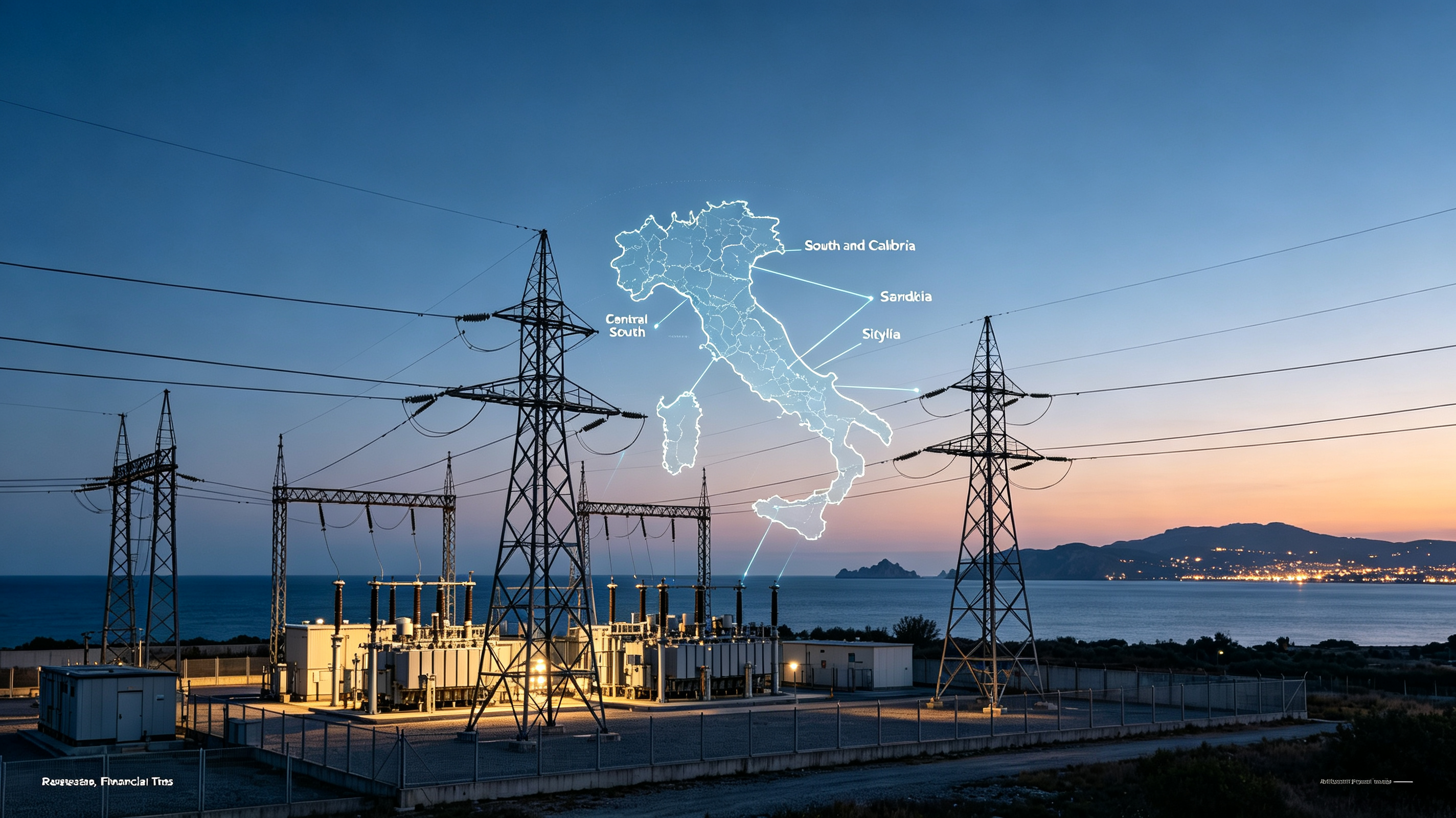
Italy Opens 16GWh Storage Auction Today as Second MACSE Round Expands by 60%
Italy will open its second MACSE energy storage auction on 24 November, procuring up to 16GWh of capacity from new projects scheduled for delivery in 2029. Compared with the first auction, procurement volume has increased by 60%, while the maximum permitted bid has been reduced from €37,000/MWh/year to €27,000/MWh/year. The results will provide a new indication of competition, regional deployment and current cost levels in Italy's energy storage market.

The Real Test Comes When the Grid Goes Down: 1,000 Witness MWh-Scale Diesel–Battery Microgrid Demonstration
A live MWh-scale demonstration at Sungrow GEPS 2026 showcased how battery storage, diesel generation and grid-forming technology can work together to deliver reliable power in off-grid applications. ENERGY PLANET joined the event to explore the technical highlights and their implications for future C&I energy storage projects.

Tesla Launches 7.4MW Powercore: Connecting Batteries Directly to the 34.5kV Grid and Medium Voltage to 800V Data Centres
Tesla has launched Powercore, a solid-state medium-voltage platform integrating transformer, bidirectional inverter and circuit-breaker functions. Rated at 7.4MW, it connects 800V–2,000V DC systems with 10kV–34.5kV AC networks, targeting battery storage, solar and 800V AI data centres. The first units are scheduled to operate in 2027, although Tesla has not disclosed pricing, customers or initial projects.
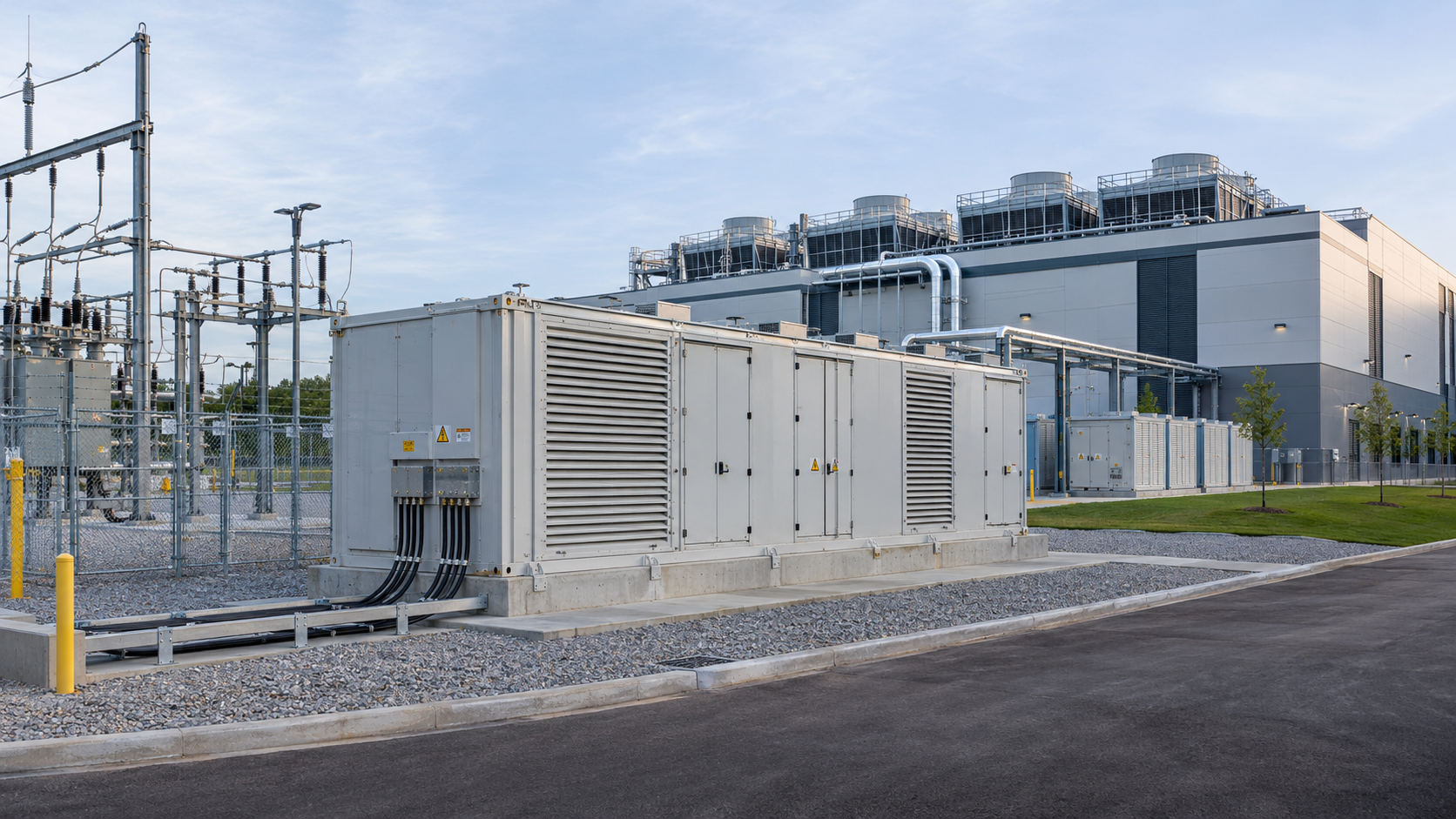
UPS Moves to the Grid Edge as Vertiv Launches 3 MVA Medium-Voltage System
Vertiv has launched the 3 MVA PowerNexus MV UPS, moving UPS functionality from the indoor low-voltage side to the outdoor 34.5kV grid connection point. Designed for new and expanding AI data centres, the system integrates fault ride-through, AI load smoothing, power-quality control and one-to-four-hour battery backup. Following a proof-of-concept demonstration in Bologna, commercial shipments are expected to begin in mid-2027.

CATL Delivers First 8-Hour EnerQB Systems for Quinbrook's 24GWh Australian Pipeline
CATL and Quinbrook Infrastructure Partners have completed production and delivery of the first EnerQB long-duration energy storage systems. Designed for eight-hour discharge, the initial units will undergo a 12-month trial at Stanwell Power Station in Queensland, Australia. Quinbrook has identified a potential 3GW/24GWh project pipeline, although wider deployment will depend on trial results, financing, grid connections and subsequent procurement.

1.24GWh! Sungrow Supplies Europe's Largest Operational Energy Storage Project
BW ESS’s Hams Hall project in the UK has officially brought its first phase online, with 350MW/1.243GWh of capacity, making it the largest operational battery storage project in Europe. Sungrow supplied the BESS, with Energy-IO and other partners involved in project delivery. The project also secured a 10-year optimisation agreement with EDF, debt financing from international banks and equity investment from AIP, highlighting the full value chain behind Europe’s GWh-scale storage projects, from equipment supply and project delivery to commercial operations and financing.

BNEF's Q4 Energy Storage Tier 1 List Shrinks 26% to 50 Manufacturers
BloombergNEF has named 50 manufacturers to its Q4 2026 Tier 1 Energy Storage list. Based on publicly available company disclosures, Energy Planet has confirmed 19 of the manufacturers and compiled historical inclusion records for 12 of them. While a single appearance shows that a supplier met the criteria for that quarter, repeat inclusion offers a stronger indication of its ability to maintain a pipeline of qualifying projects. Tier 1 remains a measure of market adoption, however, rather than a product-quality ranking, corporate credit rating or substitute for project-level technical and financial due diligence.

From 110 kV Rejection to 400 kV Approval: What Local Capabilities Do BESS Projects Need in Poland?
Poland's energy storage market is attracting a growing number of equipment manufacturers, developers and investors, but entering the market is not the same as delivering a project. In an Energy Planet webinar, CORVION P.S.A. CEO Mariusz Balicki drew on project experience, including a grid connection that shifted from a rejected 110 kV route to an approved 400 kV route and an ageing wood-processing plant that cut its energy costs by more than 30%, to explain how local teams contribute to grid analysis, system design, financial modelling, certification and long-term delivery.