Australia Restarts Energy Storage Subsidies! Fox ESS Launches Power Beast to Tap into 30 MWh C&I Bat


Fox ESS announced this week the launch of Power Beast in Australia, a battery system designed for the commercial and industrial (C&I) market. The system can be expanded to the megawatt scale and supports both grid-connected and off-grid applications.
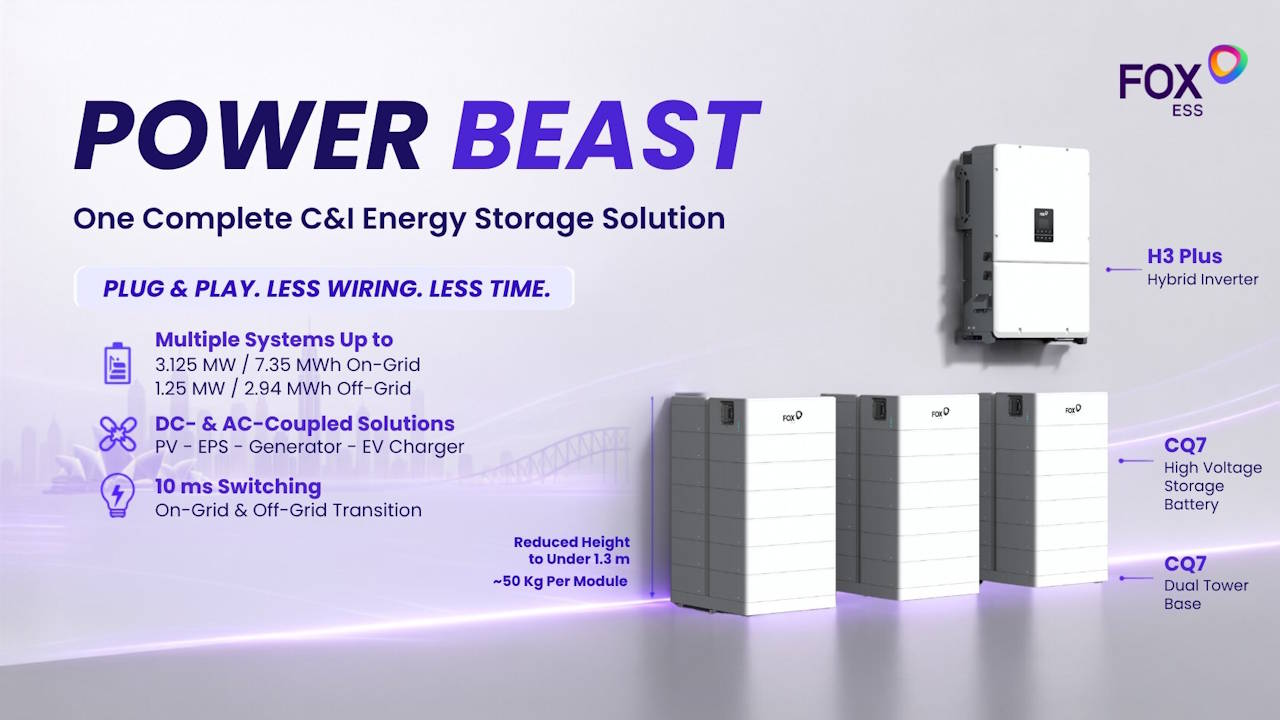
The core of Power Beast is Fox ESS’s H3 Plus hybrid inverter, which supports up to three independent battery inputs. When paired with Fox ESS’s modular CQ7 high-voltage battery, a single inverter can support up to 292 kWh of storage capacity. The system delivers50 kW to 125 kW of AC output, and in grid-connected applications, it can be expanded up to 3.125 MW / 7.35 MWh. For off-grid applications, it can reach 1.25 MW / 2.94 MWh.
Brooks Richard Geng, Managing Director of Fox ESS Asia-Pacific and Middle East, said: "By integrating the H3 Plus with the scalable CQ7 platform, we are helping partners reduce costs, save space, and deliver C&I projects with greater confidence."
The launch of Power Beast comes at a critical policy window for Australia’s energy storage market. Just weeks ago, New South Wales announced the restart and expansion of its solar battery rebate program, offering significant discounts on energy storage for apartments and small-to-medium businesses, while providing support for battery systems with capacity of up to 30 MWh in the commercial and industrial sector.
The New South Wales Labor government’s revisions to the Peak Demand Reduction Scheme (PDRS) are expected to once again reshape the landscape of behind-the-meter solar and storage, as well as their contribution to the grid, especially as the state continues to rely heavily on coal-fired power generation.
The new policy, which will take effect in September, introduces a new subsidy specifically targeting apartment buildings. Apartment buildings with more than four residential units that currently do not have energy storage systems installed will be eligible to apply for storage subsidies ranging from 20 kWh to 200 kWh, with a subsidy cap of 5 kWh per apartment. The subsidy can be combined with federal government incentives, with a maximum combined support of up to 100 kWh.
For small and medium-sized businesses (excluding residential buildings and data centers), battery systems with 20 kWh to 200 kWh of usable capacity (with a maximum discharge duration of four hours) will be eligible for subsidies. Federal incentives can support up to 100 kWh, and additional incentives are available if the battery system is installed together with a new solar PV system.
In the commercial and industrial sectors, battery systems ranging from 200 kWh to 30 MWh of usable capacity are eligible for rebates, with certificates capped at 10 MWh.
Fox ESS Australia stated on Tuesday that its new Power Beast product is one of the most valuable solutions under New South Wales’ new program. The company noted:
“For projects within the New South Wales PDRS BESS4 capacity range, one H3 Plus 100 kW inverter combined with two CQ7 battery packs can provide approximately 195 kWh of energy storage capacity, helping projects maximize their potential incentive value.”
Featured News
All News →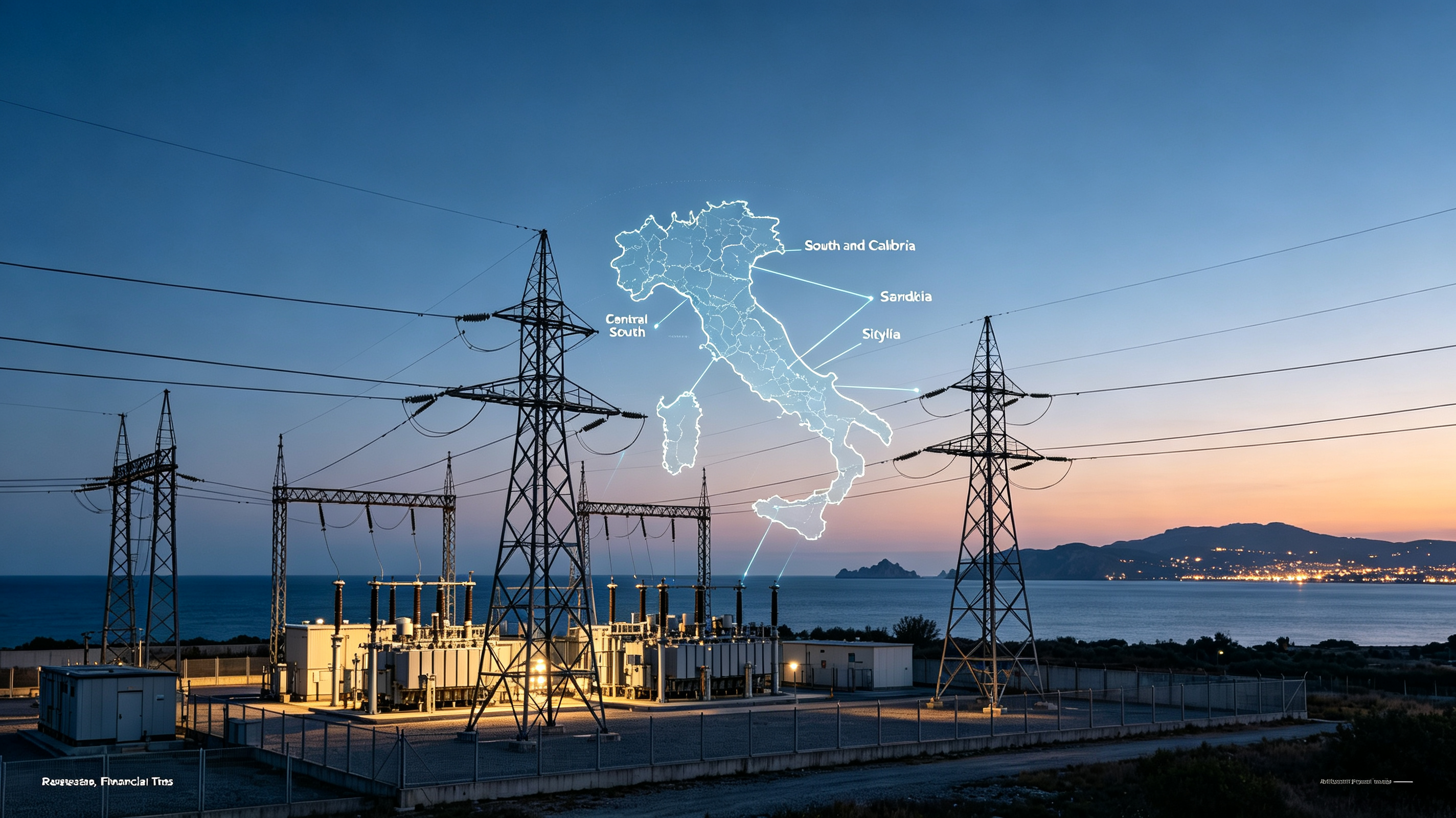
Italy Opens 16GWh Storage Auction Today as Second MACSE Round Expands by 60%
Italy will open its second MACSE energy storage auction on 24 November, procuring up to 16GWh of capacity from new projects scheduled for delivery in 2029. Compared with the first auction, procurement volume has increased by 60%, while the maximum permitted bid has been reduced from €37,000/MWh/year to €27,000/MWh/year. The results will provide a new indication of competition, regional deployment and current cost levels in Italy's energy storage market.

The Real Test Comes When the Grid Goes Down: 1,000 Witness MWh-Scale Diesel–Battery Microgrid Demonstration
A live MWh-scale demonstration at Sungrow GEPS 2026 showcased how battery storage, diesel generation and grid-forming technology can work together to deliver reliable power in off-grid applications. ENERGY PLANET joined the event to explore the technical highlights and their implications for future C&I energy storage projects.

Tesla Launches 7.4MW Powercore: Connecting Batteries Directly to the 34.5kV Grid and Medium Voltage to 800V Data Centres
Tesla has launched Powercore, a solid-state medium-voltage platform integrating transformer, bidirectional inverter and circuit-breaker functions. Rated at 7.4MW, it connects 800V–2,000V DC systems with 10kV–34.5kV AC networks, targeting battery storage, solar and 800V AI data centres. The first units are scheduled to operate in 2027, although Tesla has not disclosed pricing, customers or initial projects.
UPS Moves to the Grid Edge as Vertiv Launches 3 MVA Medium-Voltage System
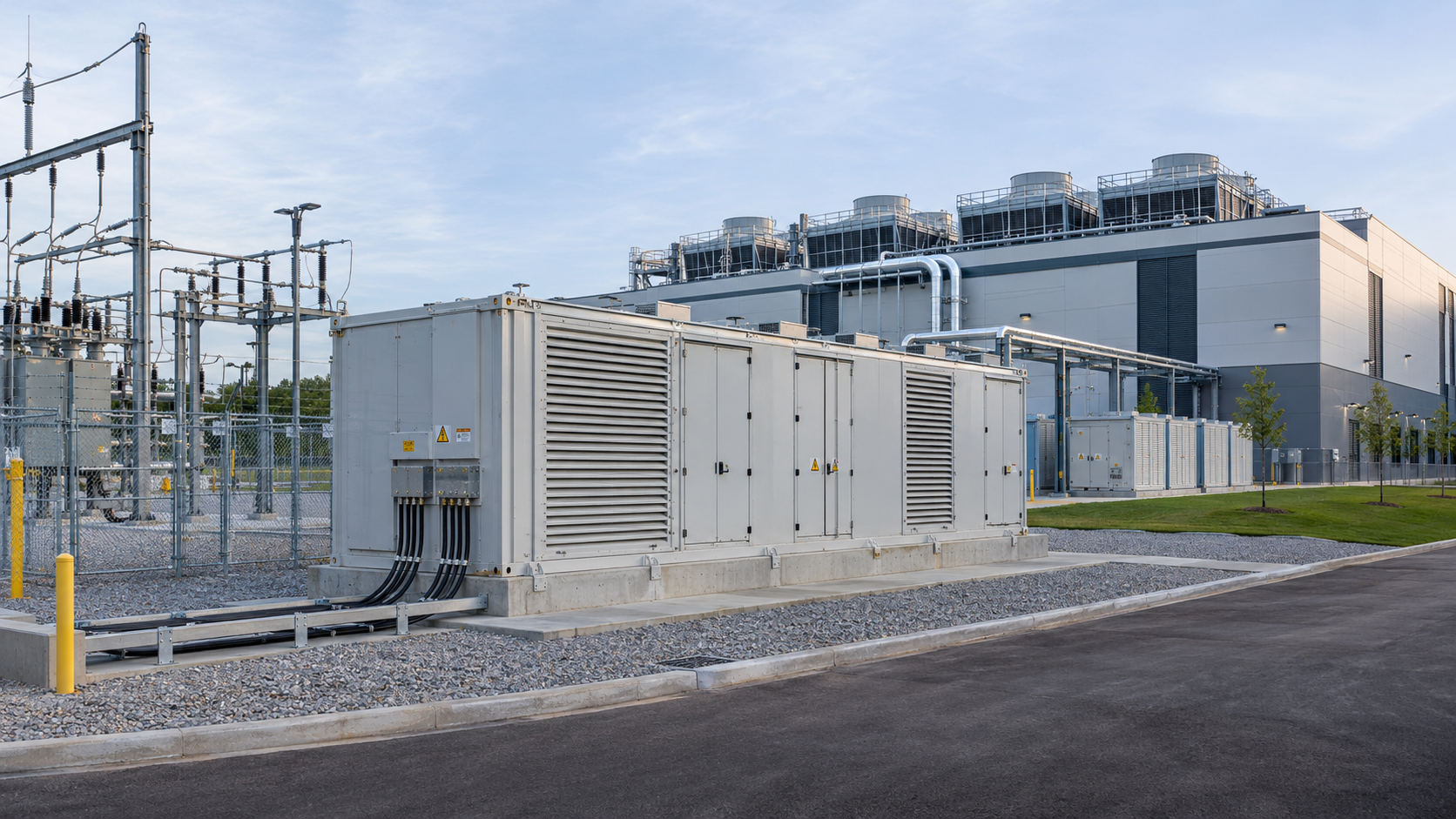
Vertiv has launched the 3 MVA PowerNexus MV UPS, moving UPS functionality from the indoor low-voltage side to the outdoor 34.5kV grid connection point. Designed for new and expanding AI data centres, the system integrates fault ride-through, AI load smoothing, power-quality control and one-to-four-hour battery backup. Following a proof-of-concept demonstration in Bologna, commercial shipments are expected to begin in mid-2027.

Envision Gen 8 Selected for 442 MWh Grid Forming BESS in Germany Taking Partnership Close to 600 MWh
Envision Energy and German storage developer ju:niz Energy are advancing the 442 MWh Smareg 13 project in Bavaria. The four-hour, grid-forming development is planned next to the operational Smareg 12 site, while public records currently show a 100 MW/401 MWh configuration and a March 2028 target date.

CATL Delivers First 8-Hour EnerQB Systems for Quinbrook's 24GWh Australian Pipeline
CATL and Quinbrook Infrastructure Partners have completed production and delivery of the first EnerQB long-duration energy storage systems. Designed for eight-hour discharge, the initial units will undergo a 12-month trial at Stanwell Power Station in Queensland, Australia. Quinbrook has identified a potential 3GW/24GWh project pipeline, although wider deployment will depend on trial results, financing, grid connections and subsequent procurement.

1.24GWh! Sungrow Supplies Europe's Largest Operational Energy Storage Project
BW ESS’s Hams Hall project in the UK has officially brought its first phase online, with 350MW/1.243GWh of capacity, making it the largest operational battery storage project in Europe. Sungrow supplied the BESS, with Energy-IO and other partners involved in project delivery. The project also secured a 10-year optimisation agreement with EDF, debt financing from international banks and equity investment from AIP, highlighting the full value chain behind Europe’s GWh-scale storage projects, from equipment supply and project delivery to commercial operations and financing.

BNEF's Q4 Energy Storage Tier 1 List Shrinks 26% to 50 Manufacturers
BloombergNEF has named 50 manufacturers to its Q4 2026 Tier 1 Energy Storage list. Based on publicly available company disclosures, Energy Planet has confirmed 19 of the manufacturers and compiled historical inclusion records for 12 of them. While a single appearance shows that a supplier met the criteria for that quarter, repeat inclusion offers a stronger indication of its ability to maintain a pipeline of qualifying projects. Tier 1 remains a measure of market adoption, however, rather than a product-quality ranking, corporate credit rating or substitute for project-level technical and financial due diligence.