What If You Could Subscribe to a Solar Panel in Spain and Use Its Electricity in Italy?


A new way of using electricity is gaining attention online: you consume electricity in Italy while your solar panel generates power in Spain.
Under the traditional model, apartment residents without a rooftop—or or those restricted by building regulations—have had little opportunity to benefit from residential solar. But Plenitude has introduced an interesting new concept. Instead of installing solar panels at home, users can "adopt" a solar panel located at the Cerrillares Solar Park in Spain. You consume electricity in Italy, while your solar panel generates electricity in Spain.
The key challenge is straightforward: How can the system verify that the electricity you consume at a given moment corresponds to the electricity generated by your adopted solar panel?
Turning a Solar Panel into a Digital Energy Account
Plenitude calls the program "Adotta un Pannello"—Italian for "Adopt a Solar Panel." According to the official program, users can choose from three different options, corresponding to 0.3 kW, 0.6 kW, and 0.9 kW of solar capacity.
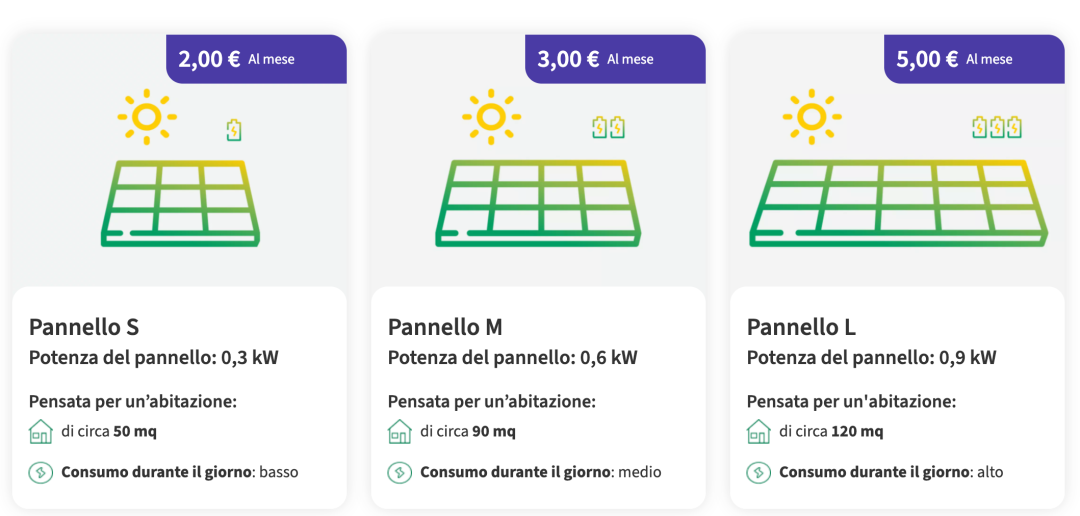
There is no construction work, and no solar equipment needs to be installed at home. Instead of purchasing a physical solar panel, users subscribe to a virtual solar service. The solar panels remain installed at the Cerrillares Solar Park, where they generate electricity as usual. Users can then track the generation of their allocated solar capacity through the Plenitude app.
This often leads to a common misunderstanding: if the solar park generates 100 kWh of electricity, does the system take those 100 kWh and physically "deliver" them through the grid to a specific household in Italy?
From the perspective of how electricity physically flows through the grid, electrons do not travel along a software-defined route from Spain to an apartment in Italy. What the system actually does is energy data matching and billing settlement. It digitizes a portion of the solar park's real generation capacity and matches it with the electricity consumption profile of a specific user. In other words, it creates a digital representation of a real-world solar asset.
The Real Key Is Matching Two Curves
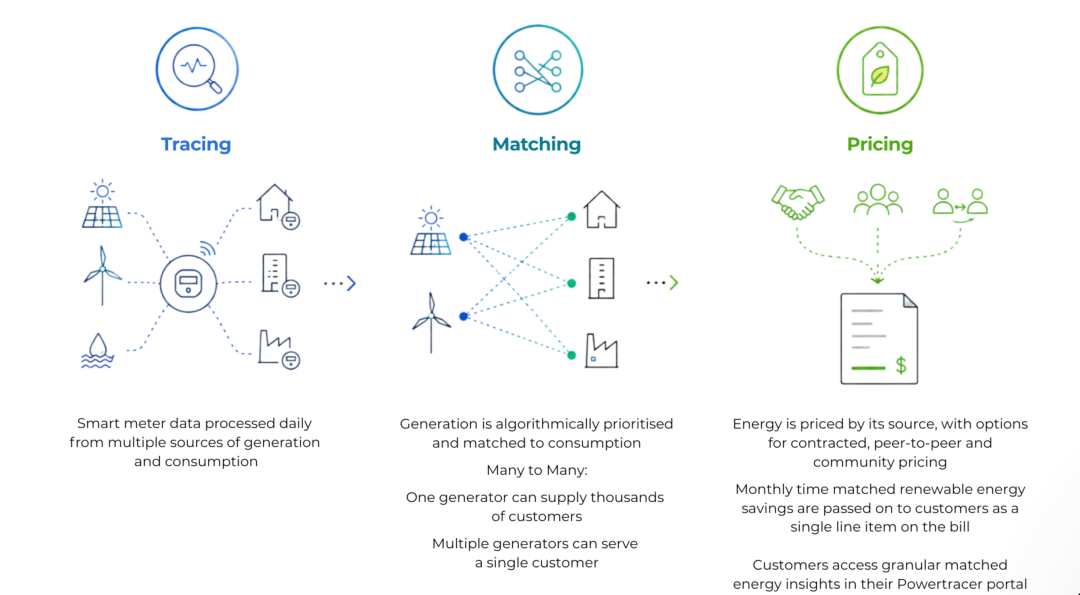
The technology behind the project comes from Australian company Enosi, whose core software platform is called Powertracer. On one side is the electricity generation data from the solar park. On the other is the electricity consumption data recorded by the user's smart meter. Based on interval metering data, Powertracer performs time-based matching between renewable energy generation and electricity consumption.
▍A simple example:
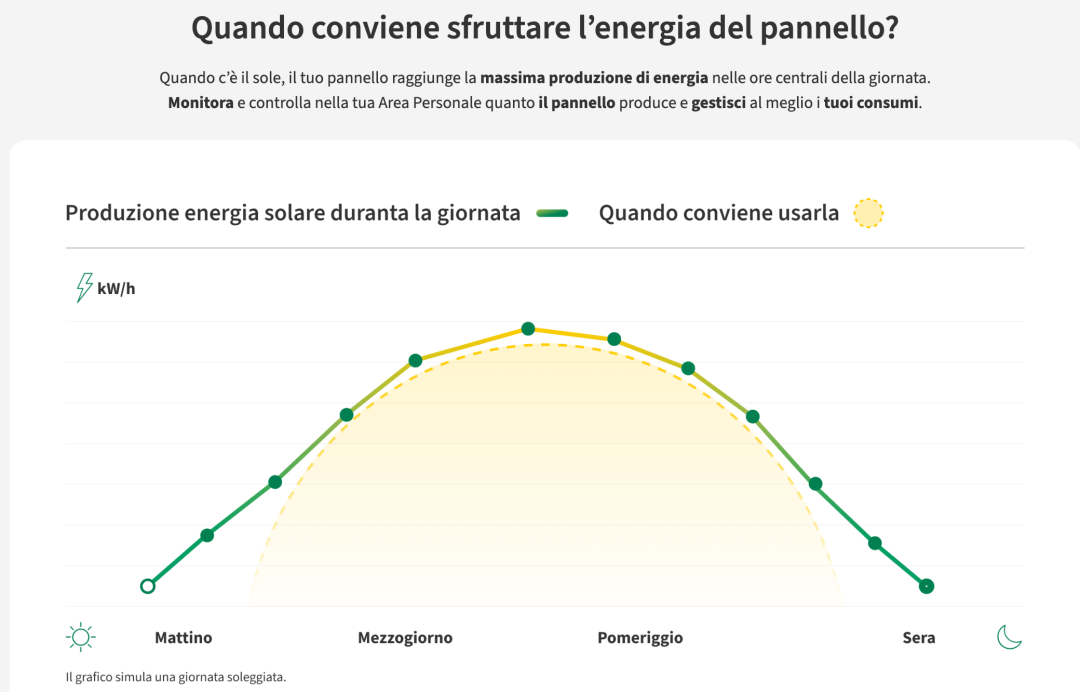
- From 12:00 pm to 12:15 pm, the solar capacity you have adopted generates 0.1 kWh.
- During the same period, your air conditioner, refrigerator, and other household appliances consume 0.15 kWh.
- In this case, 0.1 kWh can be counted as virtual self-consumption, while the remaining 0.05 kWh is billed under your standard electricity supply contract.
- Conversely, if your adopted solar capacity generates 0.1 kWh during that period, but your household only consumes 0.04 kWh, then only 0.04 kWh can be matched.
The key is not how much electricity is generated over an entire day, but whether electricity generation and consumption occur during the same time interval.
Under Plenitude's current program, users are required to have a second-generation smart meter with interval data collection enabled. Based on the smart meter data and the solar generation monitoring data, the system calculates the user's virtual self-consumed electricity.
For the portion of electricity that is successfully matched, Plenitude offers a 100% discount on the energy charge associated with that electricity. This refers only to the energy charge for the matched electricity—it does not mean the user's entire electricity bill becomes zero. Electricity that cannot be matched, electricity consumed at night, or consumption exceeding the actual solar generation during a given period is still billed under the normal electricity tariff.
Plenitude does not promise a fixed level of savings. The actual savings achieved by each user depend on their electricity tariff as well as how closely their consumption profile aligns with the solar generation profile.
Software Begins to Influence When Electricity Is Consumed
Since users only receive a discount when electricity generation and consumption occur during the same time period, a natural question arises: Will users start adjusting when they use electricity? This is exactly what makes this model particularly interesting.
As the share of renewable energy continues to grow, the time when electricity is generated often does not match the time when people need it. Solar generation peaks around midday, while residential electricity demand typically rises in the evening. The traditional solution has been to deploy battery storage—charging during the day and discharging at night.
But battery storage is not the only answer. Another approach is to adjust demand instead.
At its core, Plenitude's program tells users through their electricity bill that when their adopted solar panel is generating electricity, shifting more of their consumption into that period allows them to receive a discount on the corresponding energy charges. As a result, users gain an incentive to rethink when they run their washing machine, dishwasher, or charge their electric vehicle.
A study on Virtual Energy Networks published by Deakin University in Australia in 2026 supports a similar concept.
Around 300 households and small businesses participated in the trial. The platform enabled users to trade electricity generated by solar panels and batteries through the existing power grid. The study found that virtual energy networks improved solar energy utilization, reduced the effective electricity prices paid by households purchasing electricity through the network, and also improved users' perception of fairness within the energy system.
In other words, the software did not change how efficiently a solar panel generated electricity—but it may have changed when that electricity was consumed.
The Next Step for Solar May Not Be Selling More Hardware
According to Enosi, after Adopt A Panel was launched in May 2025, the program attracted 60,000 customers within six months, with 66% of them being new Plenitude customers. The capacity of the initial solar farm was quickly fully allocated, prompting Plenitude to add more capacity.
Traditionally, when users installed residential solar panels or home battery systems, they were purchasing tangible physical assets. The logic behind "Adopt A Panel" is different. The solar farm remains the same. The electricity grid remains the same. What has been added is a digital layer.
This digital system connects solar generation data, smart meter data, user accounts, and electricity billing into a single platform. As a result, part of the generation capacity of a utility-scale solar farm can be redesigned as a retail energy product for residential customers. For renters and apartment residents, the barrier to accessing solar energy becomes much lower. For electricity retailers, it creates a new way to connect renewable energy assets with end customers.
Perhaps the most interesting aspect of the project is that it attempts to solve a far more practical question:
As more renewable power plants come online, can we more accurately identify when each kilowatt-hour was generated, where it came from, and who actually consumed it?
In the past, the electricity grid functioned much like a large reservoir—generators poured electricity into it, and consumers simply drew electricity out. Today, however, smart meters, digital settlement systems, and energy-tracking software are adding much more detailed labels to that "reservoir."
When was this electricity generated? Which renewable asset produced it? Who consumed it during the same time interval? How should it be priced? Once these questions can be answered systematically, what energy companies sell in the future may no longer be just electricity.
It could be a virtual share of a solar farm, green electricity generated during a specific time period, or an energy service settled according to the current renewable generation profile.
The hardware has not disappeared. But on top of that hardware, an entirely new business model is beginning to emerge.
Relevant Research Reports Download👉:
Featured News
All News →
Italy Opens 16GWh Storage Auction Today as Second MACSE Round Expands by 60%
Italy will open its second MACSE energy storage auction on 24 November, procuring up to 16GWh of capacity from new projects scheduled for delivery in 2029. Compared with the first auction, procurement volume has increased by 60%, while the maximum permitted bid has been reduced from €37,000/MWh/year to €27,000/MWh/year. The results will provide a new indication of competition, regional deployment and current cost levels in Italy's energy storage market.

The Real Test Comes When the Grid Goes Down: 1,000 Witness MWh-Scale Diesel–Battery Microgrid Demonstration
A live MWh-scale demonstration at Sungrow GEPS 2026 showcased how battery storage, diesel generation and grid-forming technology can work together to deliver reliable power in off-grid applications. ENERGY PLANET joined the event to explore the technical highlights and their implications for future C&I energy storage projects.

Tesla Launches 7.4MW Powercore: Connecting Batteries Directly to the 34.5kV Grid and Medium Voltage to 800V Data Centres
Tesla has launched Powercore, a solid-state medium-voltage platform integrating transformer, bidirectional inverter and circuit-breaker functions. Rated at 7.4MW, it connects 800V–2,000V DC systems with 10kV–34.5kV AC networks, targeting battery storage, solar and 800V AI data centres. The first units are scheduled to operate in 2027, although Tesla has not disclosed pricing, customers or initial projects.
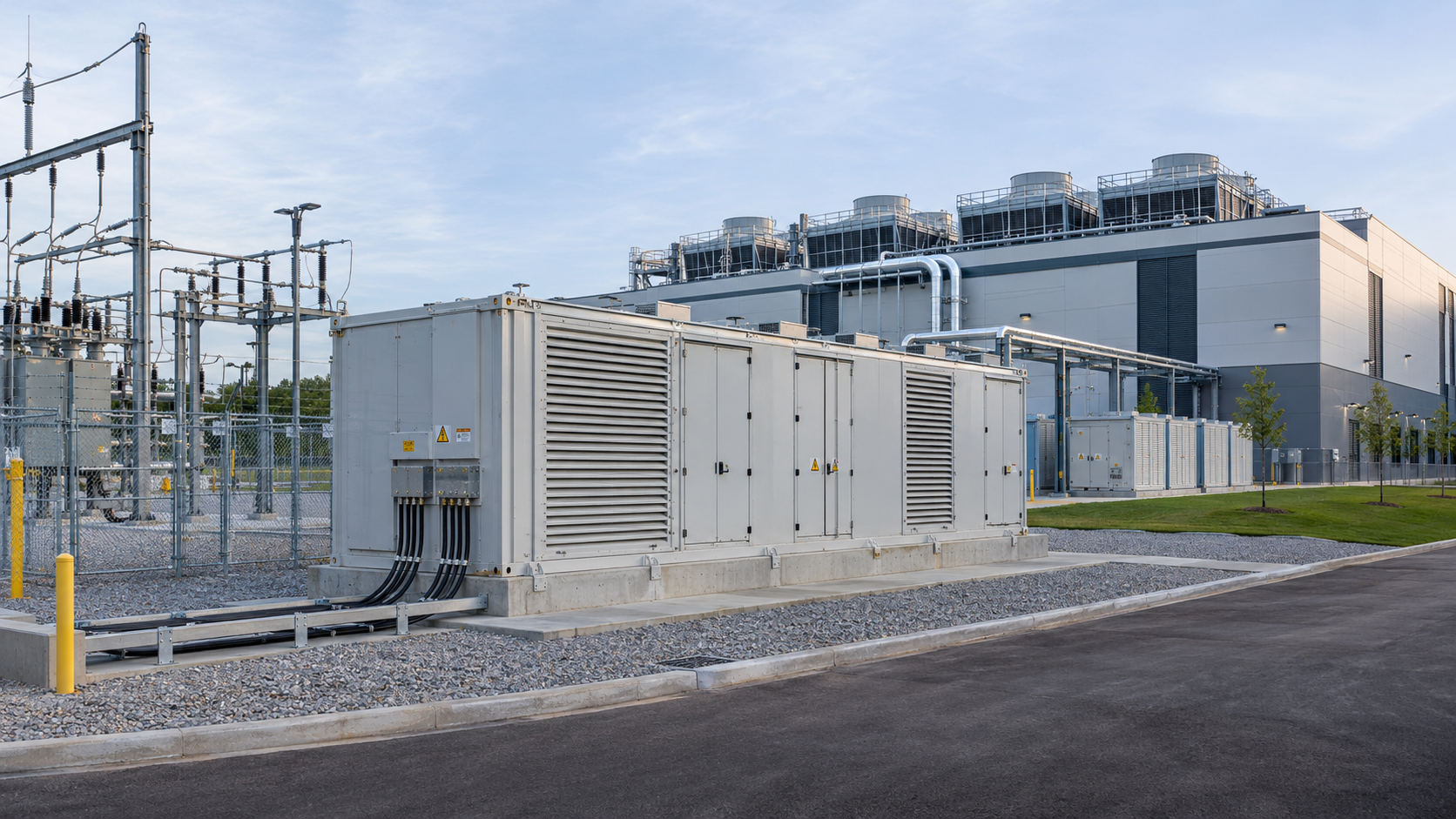
UPS Moves to the Grid Edge as Vertiv Launches 3 MVA Medium-Voltage System
Vertiv has launched the 3 MVA PowerNexus MV UPS, moving UPS functionality from the indoor low-voltage side to the outdoor 34.5kV grid connection point. Designed for new and expanding AI data centres, the system integrates fault ride-through, AI load smoothing, power-quality control and one-to-four-hour battery backup. Following a proof-of-concept demonstration in Bologna, commercial shipments are expected to begin in mid-2027.

Envision Gen 8 Selected for 442 MWh Grid Forming BESS in Germany Taking Partnership Close to 600 MWh
Envision Energy and German storage developer ju:niz Energy are advancing the 442 MWh Smareg 13 project in Bavaria. The four-hour, grid-forming development is planned next to the operational Smareg 12 site, while public records currently show a 100 MW/401 MWh configuration and a March 2028 target date.

CATL Delivers First 8-Hour EnerQB Systems for Quinbrook's 24GWh Australian Pipeline
CATL and Quinbrook Infrastructure Partners have completed production and delivery of the first EnerQB long-duration energy storage systems. Designed for eight-hour discharge, the initial units will undergo a 12-month trial at Stanwell Power Station in Queensland, Australia. Quinbrook has identified a potential 3GW/24GWh project pipeline, although wider deployment will depend on trial results, financing, grid connections and subsequent procurement.

1.24GWh! Sungrow Supplies Europe's Largest Operational Energy Storage Project
BW ESS’s Hams Hall project in the UK has officially brought its first phase online, with 350MW/1.243GWh of capacity, making it the largest operational battery storage project in Europe. Sungrow supplied the BESS, with Energy-IO and other partners involved in project delivery. The project also secured a 10-year optimisation agreement with EDF, debt financing from international banks and equity investment from AIP, highlighting the full value chain behind Europe’s GWh-scale storage projects, from equipment supply and project delivery to commercial operations and financing.

BNEF's Q4 Energy Storage Tier 1 List Shrinks 26% to 50 Manufacturers
BloombergNEF has named 50 manufacturers to its Q4 2026 Tier 1 Energy Storage list. Based on publicly available company disclosures, Energy Planet has confirmed 19 of the manufacturers and compiled historical inclusion records for 12 of them. While a single appearance shows that a supplier met the criteria for that quarter, repeat inclusion offers a stronger indication of its ability to maintain a pipeline of qualifying projects. Tier 1 remains a measure of market adoption, however, rather than a product-quality ranking, corporate credit rating or substitute for project-level technical and financial due diligence.