Sungrow Launches PowerStack 3.0: A New Take on C&I Energy Storage for More Complex Use Cases


In the past, many C&I storage projects were designed mainly around peak shaving, load shifting and time-of-use arbitrage, with relatively standardized equipment configurations. That is changing quickly.
Some sites only need a standalone storage system. Others already have rooftop solar and want PV and storage to operate as one system. Some also need EV charging, while factories with sensitive production processes may care more about whether operations can continue during a grid outage.
As use cases diversify, equipment combinations, electrical architectures and control requirements become more complex. Distributors need to manage more SKUs and inventory, EPC contractors face longer installation and commissioning chains, and O&M becomes harder to standardize.
On November 11, Sungrow launched its new-generation C&I energy storage platform, PowerStack 3.0, targeting exactly this shift toward more scenario-specific project requirements.
One of its central design ideas is what Sungrow calls an industry-first “scenario expansion dock”: a standardized base system to which different functional modules can be added depending on project needs. With this architecture, the same product platform can support four major scenarios — standalone storage, PV + storage, PV + storage + charging, and microgrids.

Addressing the Growing Fragmentation of C&I Energy Storage Use Cases
Over the past few years, All-in-One has become one of the dominant design directions in commercial and industrial energy storage. Batteries, PCS, thermal management, fire protection and control functions are integrated into a single cabinet, reducing the number of separate components and simplifying deployment.
However, project requirements do not stop at the cabinet boundary. Once a project needs to integrate PV, EV charging or microgrid functions, additional external equipment may still be required, while system design and on-site commissioning become more complicated.
All-in-One therefore solves the physical integration of equipment, but not necessarily the growing complexity created by different application combinations. Manufacturers, distributors and EPCs can still end up managing multiple product variants and system architectures.
PowerStack 3.0’s “1+N=S” architecture is designed around this problem. Instead of treating the storage cabinet as the primary unit of innovation, Sungrow moves the design perspective to the overall system. A common base platform is combined with modular functional components to create different application configurations.

In Sungrow’s terminology, “1” refers to the energy storage system equipped with the scenario expansion dock. “N” represents additional power, PV-storage, storage-charging or microgrid modules, while “S” is the final application scenario.
In other words, the design logic shifts from “selecting equipment” to “selecting the application requirement.” Sungrow describes this approach as Scene-in-One. Where All-in-One focuses primarily on integrating physical equipment, Scene-in-One extends that idea to application-level integration: how a single platform can serve different project requirements without redesigning the system from scratch.
The result is that scenario adaptability is moved upstream into product design and factory configuration. What changes is not only how modules are combined, but also what is being delivered. Instead of delivering a storage cabinet that later has to be adapted on site, the objective becomes delivering a scenario-ready system designed to work as an integrated whole.
PowerStack 3.0 Is Designed to Adapt Across Multiple Scenarios
In standalone storage applications, the 4-hour version of PowerStack 3.0 can be converted into a 2-hour system by replacing only the PCS module. Other components remain unchanged, which means the two configurations can share the same spare parts. Installation and commissioning procedures also remain the same, reducing training and after-sales complexity.
In PV + storage applications, adding a PV-storage module allows the energy storage PCS to handle PV power conversion as well, removing the need for a separate PV inverter. This reduces the number of external devices and simplifies the system chain, while also eliminating part of the commissioning work between the PV inverter and the energy storage system.
The system uses a full silicon-carbide PCS with a maximum conversion efficiency of 99.2%, supports PV input of up to twice the rated capacity, and is designed for stronger grid adaptability. For PV + storage + charging applications, an additional storage-charging module enables PV, storage and charging infrastructure to be connected on the DC side.
The DC-coupled architecture reduces AC/DC conversion stages and, according to Sungrow, improves overall system efficiency by 5%. Where transformer capacity is constrained, the storage system can also provide peak power support, potentially reducing the need for transformer expansion. In microgrid applications, adding the microgrid module enables the system to isolate grid voltage disturbances.
According to Sungrow, under normal operating conditions, loads are supplied through power converted by the storage system. If the grid fails, the interruption occurs at the grid input to the storage system, while the battery continues supplying the load.
This allows the system to achieve what Sungrow describes as a “true 0 ms” transition between grid-connected and off-grid operation without relying on an external STS cabinet. For applications such as precision manufacturing, where even very short interruptions can affect production, this type of continuity can be critical.
External STS equipment and multi-vendor system integration can introduce additional failure points, compatibility issues and commissioning risks. By integrating grid-connected and off-grid functionality directly into the platform, PowerStack 3.0 aims to reduce those external dependencies and simplify plant-level commissioning and O&M.
Each of the four application scenarios addresses a different operational challenge. Standalone storage reduces the number of product variants and spare parts that need to be stocked. PV + storage reduces external equipment. PV + storage + charging improves system integration and project delivery efficiency. Microgrid configurations focus on continuity of supply.
Sungrow also says additional modules can be introduced in the future to support further application scenarios. This is where the practical value of the scenario expansion dock becomes visible: not just in product architecture, but across system design, delivery and long-term operation.
Flexible Scenarios Still Depend on a Strong Base Platform
Modularity is only useful if the underlying system can operate reliably across different sites, environments and load conditions. PowerStack 3.0 delivers an energy density of 256kWh per square meter of footprint and supports side-by-side, back-to-back and face-to-face installation layouts. Between one and 20 units can be connected in parallel.
According to Sungrow, a 5MWh project using PowerStack 3.0 requires 43% less footprint than the previous-generation system, which can be important for sites where available space is limited. That flexibility also allows developers to adapt equipment layouts to irregular factory areas, industrial park spaces and other site constraints instead of being locked into a single arrangement. For environmental protection, PowerStack 3.0 is rated IP55 with C5 corrosion protection and can operate from -30°C to 50°C.
Sungrow also states that the system can tolerate grid harmonic levels of up to 30%. On efficiency, the system’s full silicon-carbide PCS reaches a maximum conversion efficiency of 99.2%. Combined with 684Ah stacked battery cells, system round-trip efficiency exceeds 92%, according to Sungrow. Safety is addressed through three levels of overcurrent protection and four layers of safety protection.
The 684Ah stacked-cell design is also intended to improve more than energy density. Sungrow says the stacked structure reduces mechanical stress at internal corners while providing additional gas-release paths, helping reduce the risk of internal short circuits and thermal runaway.
These specifications may appear to address different parts of the system, but they ultimately answer the same question: Can a common platform continue to operate safely, efficiently and reliably when deployed across different sites and different load profiles?
Highlight 1: Modular Hardware Is Only Useful If the Whole System Can Coordinate It
Adding hardware modules is relatively straightforward. Coordinating them at the system level is harder. If the control architecture cannot automatically identify and manage different modules, each new project configuration still requires substantial on-site setup and commissioning. PowerStack 3.0 therefore introduces an integrated controller that combines key functions previously handled by EMS, CMU and LC layers.
According to Sungrow, the control architecture is reduced from four layers to two. Each cabinet includes EMS-related functionality, eliminating the need for a separate external EMS and removing the pairing and commissioning step between EMS and LC.
Sungrow says this enables control response within 100ms and reduces communication-related failure rates by 20% compared with the previous control architecture. Each cabinet can make independent control decisions, while multiple cabinets coordinate through a cluster-based control mechanism. The system is also designed to complete part of the commissioning process automatically.
If the cabinet acting as the master controller fails, another unit can be reassigned as the master, reducing the impact of a single-point control failure on the overall plant. This matters for a platform built around scenario-based expansion. Module combinations may change and the number of cabinets may increase, but the control architecture should not have to be rebuilt from scratch every time the physical configuration changes.
Highlight 2: Bubbly Extends AI from Planning to O&M
If the scenario expansion dock addresses how hardware adapts to different use cases, Sungrow’s self-developed AI assistant, Bubbly, focuses on efficiency across planning, construction, operation and maintenance. Bubbly does not make decisions independently of the power plant.
Instead, it collects operating data including cell temperature, PCS status, site load, electricity price signals, weather conditions and solar irradiance, and then adjusts charging and discharging strategies based on actual operating conditions.
During the planning phase, Bubbly can generate a customized system design and revenue forecast within 30 seconds. During construction, the platform can complete site configuration and information verification with one click, reducing manual checking and the risk of parameter mismatches. Sungrow says commissioning for complex scenarios can be completed in as little as three minutes.
During system management, Bubbly combines PV generation forecasts and load forecasts to coordinate solar, storage, charging infrastructure, diesel generation and site loads. According to Sungrow’s calculations, optimized dispatch can increase revenue by 12% compared with a basic self-consumption strategy.

During operation, users can check system status and revenue through a single interface, while the platform performs revenue analysis based on actual operating data to support operational decisions. For maintenance, Bubbly can proactively identify more than 30 potential risks and generate a fault diagnosis report within one minute, together with recommended maintenance actions.
Taken together, these functions extend AI beyond system monitoring. The software is involved in pre-construction system design, commissioning before operation, dispatch optimization during operation and fault handling during maintenance.
Hardware determines which application scenarios the system can support. Software determines whether the system can continue adapting after commissioning as load profiles, electricity prices and solar generation change.
From Selling a Storage Cabinet to Delivering a Scenario
PowerStack 3.0 is not simply a product upgrade. It reflects a change in how the product itself is defined. Instead of treating the energy storage cabinet as the design boundary, Sungrow starts from the requirements of the overall project.
That matters because a factory’s energy requirements rarely remain static. A site may initially use storage only for peak-valley arbitrage. Later it may add rooftop PV, EV charging infrastructure or new production lines. Requirements around power quality, energy management and backup supply may also change over time.
A storage system therefore cannot be designed only around today’s operating model. It also needs enough flexibility to accommodate future changes. This is the logic behind Scene-in-One. Functions that previously had to be engineered and integrated separately at the project site are increasingly being moved into a modular product platform.
Sungrow’s broader “S+ Energy Storage” scenario-based approach follows the same logic: begin with the user’s operating scenario and the problem that needs to be solved, and then determine how the product should be configured.
Capacity, efficiency and price will remain important. But these metrics largely determine whether a product can enter a project. What ultimately determines the long-term value of the asset is whether it can continue to optimize its operation after commissioning and adapt as the customer’s requirements evolve. The next phase of the C&I energy storage market may therefore be defined by more than equipment cost.
The bigger competitive question is who understands the application scenario better. If product platforms can absorb more of the system complexity while giving customers a simpler and more predictable project experience, that may become one of the clearest sources of long-term value — and a key advantage for companies looking to remain competitive through the next industry cycle.
Featured News
All News →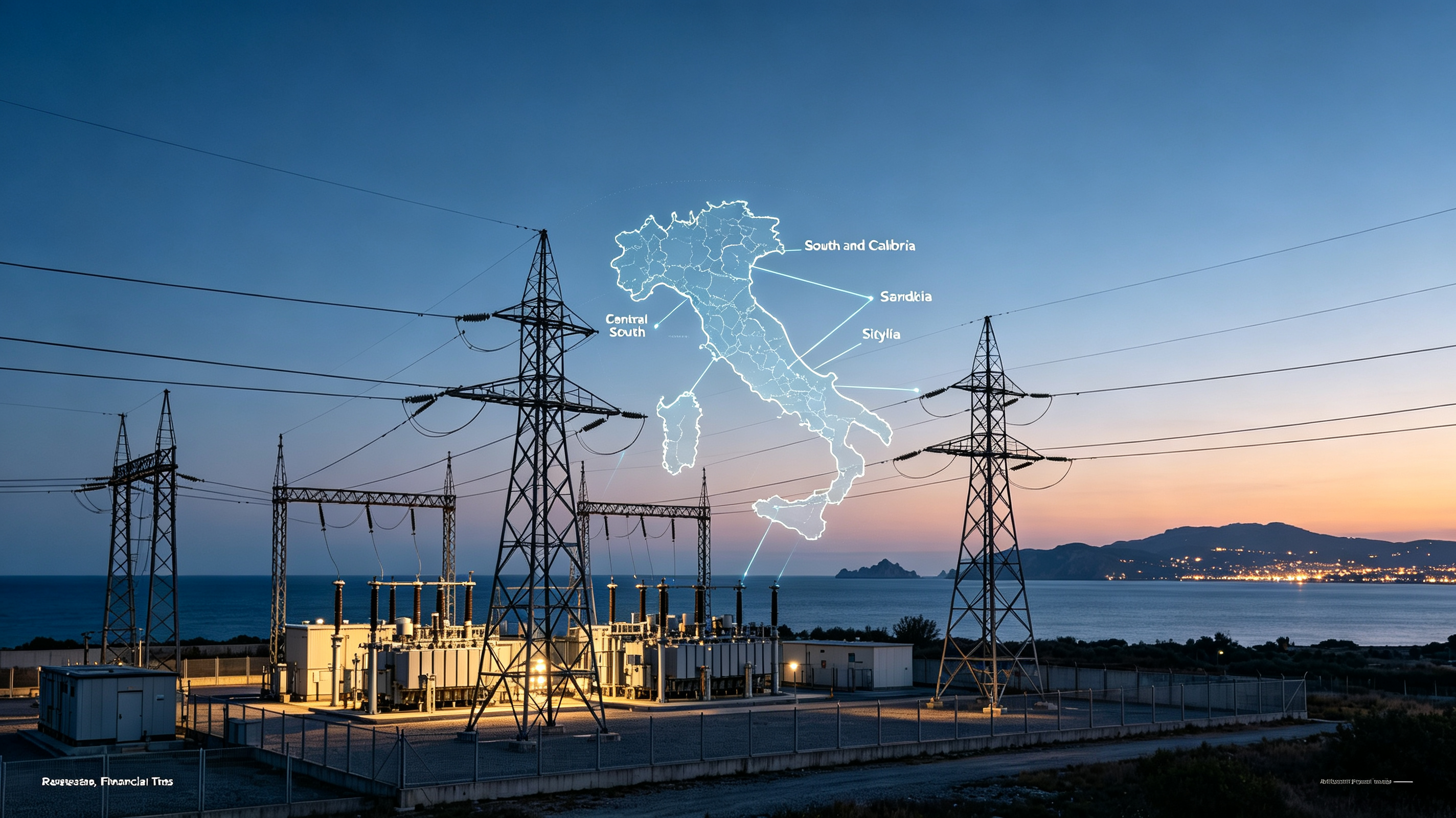
Italy Opens 16GWh Storage Auction Today as Second MACSE Round Expands by 60%
Italy will open its second MACSE energy storage auction on 24 November, procuring up to 16GWh of capacity from new projects scheduled for delivery in 2029. Compared with the first auction, procurement volume has increased by 60%, while the maximum permitted bid has been reduced from €37,000/MWh/year to €27,000/MWh/year. The results will provide a new indication of competition, regional deployment and current cost levels in Italy's energy storage market.

The Real Test Comes When the Grid Goes Down: 1,000 Witness MWh-Scale Diesel–Battery Microgrid Demonstration
A live MWh-scale demonstration at Sungrow GEPS 2026 showcased how battery storage, diesel generation and grid-forming technology can work together to deliver reliable power in off-grid applications. ENERGY PLANET joined the event to explore the technical highlights and their implications for future C&I energy storage projects.

Tesla Launches 7.4MW Powercore: Connecting Batteries Directly to the 34.5kV Grid and Medium Voltage to 800V Data Centres
Tesla has launched Powercore, a solid-state medium-voltage platform integrating transformer, bidirectional inverter and circuit-breaker functions. Rated at 7.4MW, it connects 800V–2,000V DC systems with 10kV–34.5kV AC networks, targeting battery storage, solar and 800V AI data centres. The first units are scheduled to operate in 2027, although Tesla has not disclosed pricing, customers or initial projects.
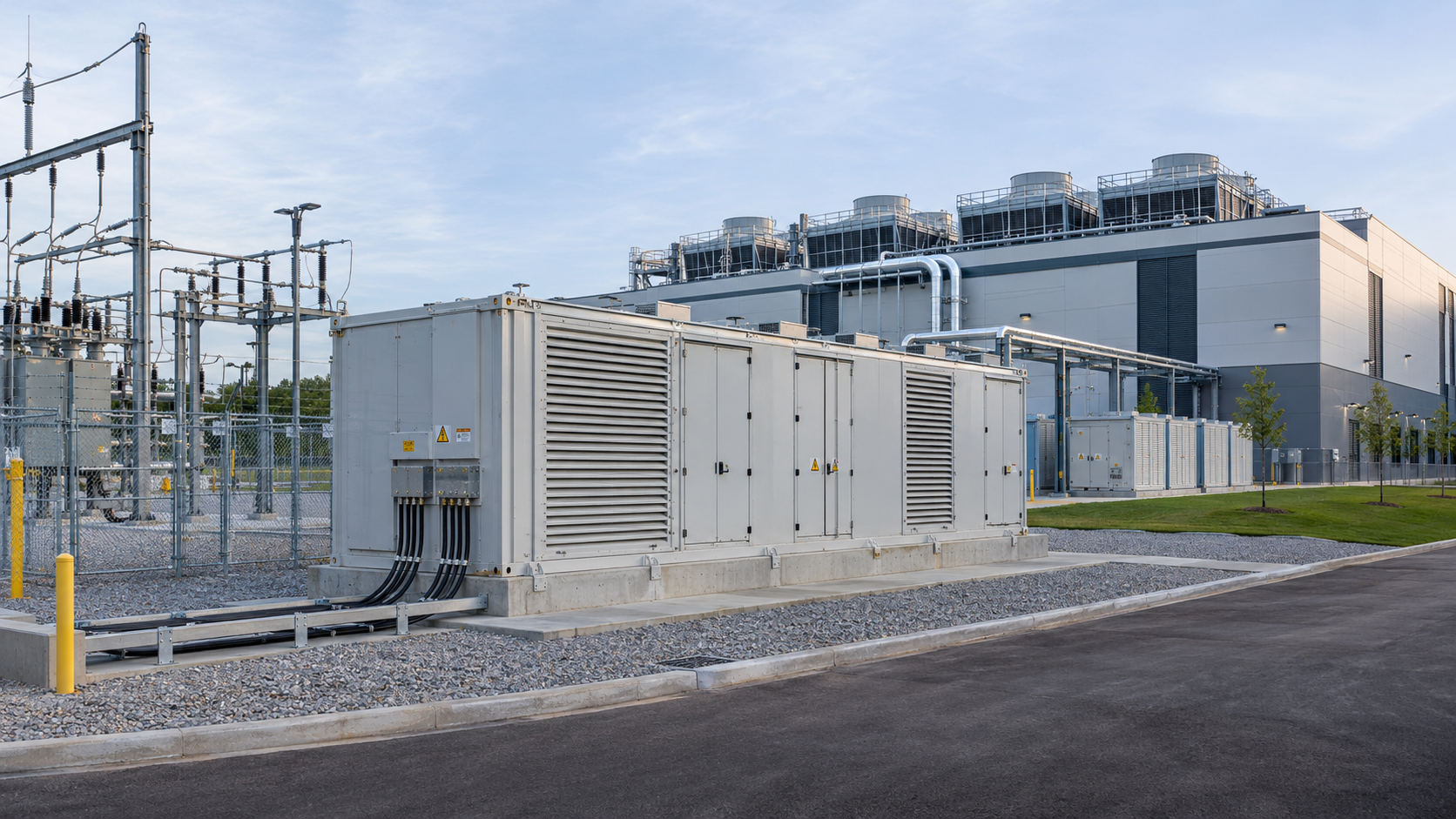
UPS Moves to the Grid Edge as Vertiv Launches 3 MVA Medium-Voltage System
Vertiv has launched the 3 MVA PowerNexus MV UPS, moving UPS functionality from the indoor low-voltage side to the outdoor 34.5kV grid connection point. Designed for new and expanding AI data centres, the system integrates fault ride-through, AI load smoothing, power-quality control and one-to-four-hour battery backup. Following a proof-of-concept demonstration in Bologna, commercial shipments are expected to begin in mid-2027.

Envision Gen 8 Selected for 442 MWh Grid Forming BESS in Germany Taking Partnership Close to 600 MWh
Envision Energy and German storage developer ju:niz Energy are advancing the 442 MWh Smareg 13 project in Bavaria. The four-hour, grid-forming development is planned next to the operational Smareg 12 site, while public records currently show a 100 MW/401 MWh configuration and a March 2028 target date.

CATL Delivers First 8-Hour EnerQB Systems for Quinbrook's 24GWh Australian Pipeline
CATL and Quinbrook Infrastructure Partners have completed production and delivery of the first EnerQB long-duration energy storage systems. Designed for eight-hour discharge, the initial units will undergo a 12-month trial at Stanwell Power Station in Queensland, Australia. Quinbrook has identified a potential 3GW/24GWh project pipeline, although wider deployment will depend on trial results, financing, grid connections and subsequent procurement.

1.24GWh! Sungrow Supplies Europe's Largest Operational Energy Storage Project
BW ESS’s Hams Hall project in the UK has officially brought its first phase online, with 350MW/1.243GWh of capacity, making it the largest operational battery storage project in Europe. Sungrow supplied the BESS, with Energy-IO and other partners involved in project delivery. The project also secured a 10-year optimisation agreement with EDF, debt financing from international banks and equity investment from AIP, highlighting the full value chain behind Europe’s GWh-scale storage projects, from equipment supply and project delivery to commercial operations and financing.

BNEF's Q4 Energy Storage Tier 1 List Shrinks 26% to 50 Manufacturers
BloombergNEF has named 50 manufacturers to its Q4 2026 Tier 1 Energy Storage list. Based on publicly available company disclosures, Energy Planet has confirmed 19 of the manufacturers and compiled historical inclusion records for 12 of them. While a single appearance shows that a supplier met the criteria for that quarter, repeat inclusion offers a stronger indication of its ability to maintain a pipeline of qualifying projects. Tier 1 remains a measure of market adoption, however, rather than a product-quality ranking, corporate credit rating or substitute for project-level technical and financial due diligence.